Navigating Uninsurable Waters in the Middle East Conflict
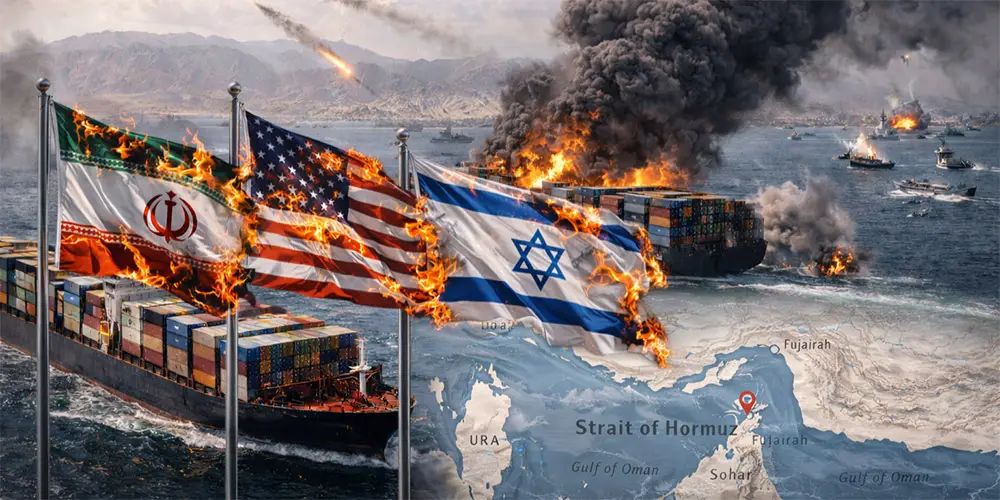
The global shipping and logistics industry is once again confronting a familiar but deeply disruptive reality. The geopolitical conflict has outpaced the assumptions built into traditional marine insurance frameworks. The escalation of hostilities in the Middle East, particularly the effective shutdown of the Strait of Hormuz, has triggered a rapid and consequential shift in how insurers approach war risk. For cargo owners, freight forwarders and insurers alike, the implications are immediate, complex and commercially significant.
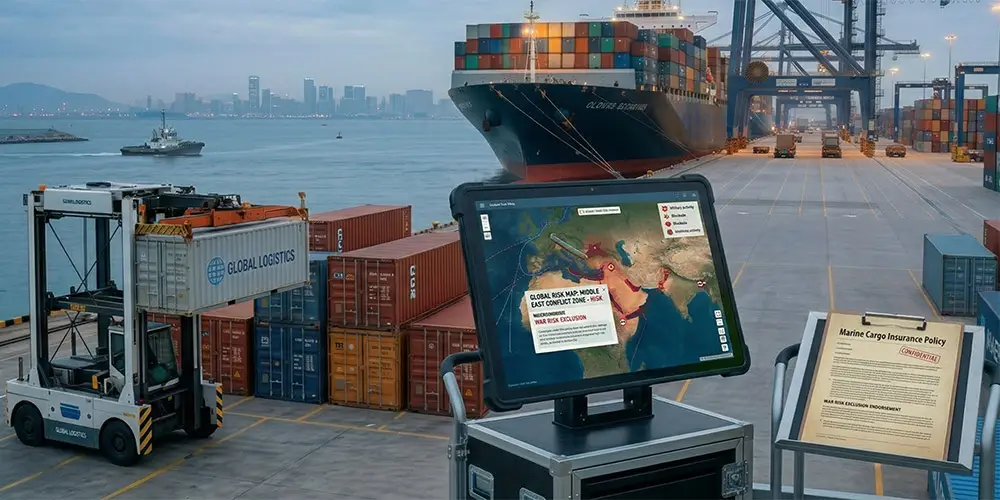
At the centre of this disruption lies the War Risk Exclusion Endorsement, a clause that has moved from being a technical footnote in policy wordings to a decisive factor shaping global trade flows.
The War Risk Exclusion Endorsement: From Clause to Catalyst
Standard marine cargo policies have always excluded losses arising from acts of war, terrorism, and related hostilities. These exclusions are not incidental; they are fundamental to the structure of marine insurance. To bridge this gap, insured parties typically purchase separate war risk cover, often via endorsements or standalone policies.
However, in the current conflict environment, this carefully balanced structure has fractured. Underwriters across the global market have issued notices cancelling war risk cover, sometimes with as little as seven days’ notice, effectively stripping cargo policies of protection against one of the most immediate and material risks in the region.
This is not merely a technical adjustment. It is a systemic withdrawal of capacity. As conflict intensifies and risks become unquantifiable, insurers are reverting to their foundational principle, “avoid exposure where loss cannot be modelled or priced with confidence”.
Cancellation of War Risk Cover: A Market Under Strain
The cancellation of war-related cover has been swift and widespread. Leading marine insurers have withdrawn war risk protection for vessels transiting the Gulf, particularly in response to direct attacks on commercial shipping and the declaration that the Strait of Hormuz is effectively closed.
This has created what many in the industry are calling a “coverage vacuum”. Without war risk insurance, vessels, and by extension, their cargo are exposed to:
- Missile and drone attacks
- Seizure or confiscation
- Damage from military operations
- Denial of safe passage through critical shipping lanes
The consequences are stark. Shipowners are unwilling to enter high-risk zones without cover, and cargo interests may find that even if goods are physically movable, they are no longer insurable in transit.
In practical terms, insurance availability, not just physical risk, has become the gating factor for trade.
Cargo Exposure in a High-Risk Environment
For cargo owners, the withdrawal of war risk cover fundamentally alters the risk profile of shipments. Goods in transit through affected regions are now exposed to uninsured losses, which may include total loss, delay, or damage resulting directly from hostilities.
The situation is exacerbated by the interconnected nature of global supply chains. Disruption in one corridor, such as the Strait of Hormuz through which roughly 20% of global oil supply transits, has cascading effects across multiple sectors.
Cargo exposures now extend beyond physical damage to include:
- Delay risk: Extended transit times due to rerouting
- Accumulation risk: Cargo building up at ports or transhipment hubs
- Contingent risk: Disruption to downstream supply chains
Moreover, traditional cargo policies, absent war endorsements, will not respond to these losses. This creates a critical gap between operational risk and insured risk, one that many cargo owners are only now beginning to fully appreciate.
Market Response: Rising Premiums, Reduced Capacity
Where war risk cover remains available, it is being offered at significantly increased premiums and under far stricter conditions. In some cases, war risk premiums have increased fivefold within days, reflecting both the severity and unpredictability of the threat environment.
At the same time, insurers are narrowing the scope of coverage:
- Specific geographic exclusions are being expanded
- Transit warranties are being tightened
- Deductibles are increasing
- Coverage is being offered on a voyage-by-voyage basis
This shift reflects a broader recalibration of the insurance market. As geopolitical risk becomes more volatile and less predictable, insurers are reassessing their exposure not only to physical conflict but also to emerging forms of warfare, including cyber disruption and state-sponsored attacks.
The result is a market characterised by reduced capacity, higher costs and increased complexity.
Shipping and Routing: Insurance as a Determinant of Trade Flows
Perhaps the most profound impact of the current crisis is the way in which insurance is shaping routing decisions.
With the Strait of Hormuz effectively closed and insurance withdrawn, many shipping lines have opted to reroute vessels around the Cape of Good Hope. This is not a minor adjustment. It adds weeks to transit times, increases fuel consumption and significantly raises freight costs.
The pattern is not new. Similar rerouting has been observed in the Red Sea, where attacks on vessels forced ships to bypass the Suez Canal, adding thousands of nautical miles to journeys.
However, what distinguishes the current situation is the central role of insurance. It is not only the physical threat that is driving rerouting, but the inability to secure adequate cover.
In effect, insurers are acting as “de facto” regulators of global trade routes.
Implications for Logistics and Supply Chains
From a logistics perspective, the withdrawal of war risk cover introduces a new layer of uncertainty into already strained supply chains.
Recent disruptions have demonstrated how quickly logistics networks can be destabilised. Airspace closures, port shutdowns and rerouted shipments are already affecting critical sectors such as pharmaceuticals, where temperature-sensitive cargo cannot easily absorb delays.
For cargo owners and logistics providers, the implications include:
- Increased transit times and inventory holding costs
- Higher freight and insurance costs
- Greater reliance on alternative routes and modes of transport
- Elevated risk of supply chain disruption
These challenges are compounded by the fact that insurance solutions are no longer readily available or predictable.
Managing Cargo Risk in an Evolving Conflict Landscape
In this environment, risk management must evolve beyond reliance on traditional insurance structures. While insurance remains a critical tool, it is no longer sufficient on its own.
Cargo owners and logistics providers should consider a more integrated approach to risk management, including:
- Enhanced Route PlanningEvaluate alternative shipping routes, even where they involve longer transit times. The priority must shift from speed to certainty and insurability.
- Contractual Risk AllocationReview Incoterms and contractual arrangements to ensure that risk is appropriately allocated between buyers, sellers and carriers.
- Real-Time Risk MonitoringLeverage intelligence on geopolitical developments to inform routing and scheduling decisions.
- Diversification of Supply ChainsReduce reliance on high-risk corridors by diversifying sourcing and distribution networks.
- Engagement with Insurers and BrokersMaintain close communication with insurers to understand evolving coverage conditions and explore bespoke solutions where possible.
It is also critical to understand the limitations of any remaining war risk cover. Even where policies are available, they may exclude certain types of loss, including cyber-related incidents or losses linked to sanctioned territories.
A Structural Shift in Marine Insurance
The current crisis is not simply a temporary disruption. It represents a structural shift in how geopolitical risk is priced and managed within the marine insurance market.
War exclusions, once seen as a technical necessity, are now central to the commercial viability of global trade. The rapid withdrawal of war risk cover has exposed the fragility of existing insurance models and highlighted the need for more adaptive and resilient approaches.
At the same time, the crisis is driving innovation. Demand for specialised insurance products which can address complex and evolving risks is increasing. Insurers, brokers and clients alike are being forced to rethink traditional assumptions about risk, coverage and responsibility.
Trading in an Age of Uncertainty
The intersection of conflict, insurance and logistics has never been more visible. The cancellation of war risk cover in the Middle East has transformed insurance from a background function into a frontline determinant of trade.
For cargo owners and logistics providers, the message is clear: insurability is now as important as physical feasibility. Routes, contracts and supply chains must be designed not only to move goods efficiently, but to ensure that those goods remain insurable throughout their journey.
In an era where geopolitical risk can escalate overnight, resilience will depend on the ability to adapt intelligently and with a clear understanding of where risk truly lies.
The War Risk Exclusion Endorsement may be a clause in a policy, but in today’s environment, it is shaping the very architecture of global trade.
Gregory MarksBusiness Development & Transformation ManagerTurners Shipping – Cape Town, South Africa
Jivika ChrisenduthLegal AdvisorTurners Shipping – Durban, South Africa